Showing posts with label Special Interests. Show all posts

Sunday, February 5, 2017

Public-Private Partnerships, Planning & Bristol's Depot Centre Square


 You may not have heard about it but the Bristol, CT City Council passed a resolution to submit a grant application for a Working Cities Challenge Grant.  The planning grant is being offered by the Federal Reserve Bank of Boston and it's partners which consist primarily of local, regional and worldwide nonprofit philanthropic agencies.  


According to the document, the initiative is, among other things, to address access to transportation.  The United Way staff is partnered with the City of Bristol in this effort.


  Although we don't know exactly how the planning grant will be used in relation to Depot Centre Square, we do know that the last time that the City of Bristol was included on a Challenge Grant application it was for Transit-Oriented Development relating to the Depot Square site.
We also know that the United Way has been instrumental in the efforts to provide more affordable housing near public transportation in the State of Connecticut.  In fact, their ALICE Report was just referenced yet again at a recent forum attended by leaders across the state at the Lyceum in Hartford.  The Partnership for Strong Communities forum on January 30th, 2017 was focused on how to shape local zoning to provide for affordable housing options.  The ALICE (Asset-Limited-Income-Constrained-Employed) segment of the state's population is estimated at roughly 20% of those residents living in more than 85% of Connecticut's towns in the report.  The report addresses hardships for the working segment of the population that is living paycheck-to-paycheck.  I have included the wages of ALICE households under the heading of one sponsor of the program listed below.


A brief look into the priorities of the program and the vision statements of most of those organizations involved clearly indicates their goals are to help low-income residents as the city's document indicates.  Of course, there is absolutely nothing nefarious about wanting to help those who are in need.   But we must also keep in mind that it is important that the public is informed as to exactly how we go about doing so.  This is especially the case when we are talking about public land and public money.   Therefore, a little deeper digging showing where the program originates may provide Bristol residents some insight as to why it seems that all information about the planning of Bristol's future seems to have gone somewhat underground.


These initiatives can be found on the webpages of the many funders of the Working Cities Challenge Grant.  I'm not going to list them all but I will include a few to illustrate the point.  The following website states that Boston Fed's role in this partnership is to "design and implement the model in partnership with the Steering Committee".


 Living Citiesis listed as one of the primary funders/partners of the Working Cities program.  According to their website, the initiative is modeled after their "Living Cities" signature effort."  Their page describes the structure of their model as follows on their website:

"...a Steering Committee comprised of leaders from the public, private, and philanthropic sectors. Living Cities is proud to serve as one of these partners and believes in the potential power of The Federal Reserve Banks as influencers, conveners, and research partners for enduring change in places. The resulting Challenge takes the shape of a competition whereby an independent jury of experts evaluates teams' applications against criteria that reflect the core elements of the Working Cities Challenge: leading collaboratively across sectors, engaging diverse community members, using evidence to track progress toward a shared goal, and working to improve the lives of low-income and residents of color by changing systems."

I'm not exactly sure what they mean by "changing systems" but it's kind of concerning to see any shape or form of what would normally be locally-driven decision making moving behind the doors of some ominous board from somewhere across state lines.  I'm not sure if that's what the quote refers to but also concerning is the following statements from their site, 

"We take risks, catalyze fresh thinking and test new approaches in order to creatively disrupt the status quo."
"... We blend public, private and philanthropic financial resources in new ways to better meet the needs of cities and their residents.  ....We work with public sector leaders to foster more nimble, collaborative, and data-driven local governments."

A look at the funders page reveals that not only Living Cities, who is a primary funder of the Local Initiatives Support Corporation (LISC) (who is managing the State of CT Transit-Oriented Predevelopment Fund), but many of their other international funders as well.  They are listed as, "Twenty two of the world’s largest foundations and financial institutions":
The Annie E. Casey Foundation
Bank of America
Bill & Melinda Gates Foundation
Citi Foundation
Deutsche Bank
Ford Foundation
The John D. and Catherine T. MacArthur Foundation
The JPB Foundation
The Kresge Foundation
The McKnight Foundation
MetLife, Inc.
Morgan Stanley
Prudential Financial, Inc.
Robert Wood Johnson Foundation
The Rockefeller Foundation
Surdna Foundation
W.K. Kellogg Foundation
Wells Fargo

I wrote a piece about funders for LISC's role in sustainable development in the State of Connecticut in a previous blog but it's noteworthy enough to mention that the following organizations are funders of both:
Ford Foundation
Bank of America
The Kresge Foundation
The McKnight Foundation
Living Cities
Citi
W.K. Kellogg Foundation
Wells Fargo
The Rockefeller Foundation
The Annie E. Casey Foundation
MetLife, Inc.


I've included a few notables in the "funders/partners" category and attached some quotes from their website that indicates their support of the goals of the grant program for Bristol's downtown project and those across the state for those interested in reading further:

  • The State of Connecticut
  •  Worldwide Environmental Group Doris Duke Charitable Foundation
    "Land Conservation in an Era of Climate Change- Our grant making is designed to provide frameworks and concrete examples of how practitioners can protect biodiversity in light of climate change through strategic land conservation"
    "
  • The Kresge Foundation- "Communities that address climate change head-on will be better prepared for new circumstances and uncertainties. Decisions about infrastructure, building design, land use, transportation and other policy and funding issues can make communities stronger, more equitable and more resilient to the changing climate.  Our work is intended to help civic leaders consider a two-part climate question as they make decisions that shape the form and function of their communities."
    "Environmental Stewardship in the Tri-State Area - In addition to being home to a majority of Americans, urban areas in the United States feature some of the most creative environmental efforts underway. The Doris Duke Charitable Foundation is fortunate to be headquartered in a particularly vibrant location – the greater New York City area – that features a number of cutting-edge efforts to help people live more efficiently and lightly on the land. Consistent with its emphases on wildlife habitat conservation and efficient built environments, and a growing focus on connecting people living in urban areas with the environment, the Environment Program uses a small portion of its resources to support innovative environmental projects in the Tri-State area."
  • NeighborWorks America
    "About Us -We are an organization that cares deeply about affordable housing and community development and the people who benefit from them."
  • Avangrid Foundation
    "Sustainability and Biodiversity- The Avangrid Foundation is committed to supporting initiatives that focus on a sustainable energy model that can effectively meet energy needs and contribute towards protecting the environment...."
  • Boehringer Ingelheim Pharmaceuticals BI Cares Foundation
    "36,000 TONS= The reduction in BI’s U.S. carbon dioxide emissions through its BE GREEN program."
  • Hartford Foundation for Public Giving
    "The Foundation is intensifying efforts to build, join and support strong collaborations, and to forge creative, cross-cutting approaches.  Collaborating with our communities, we will employ the following key strategies: Build, Sustain and Share Knowledge, Influence Public Policy, Inspire Philanthropy and Steward Resources, Invest in the Region"
  • Webster Bank
    "Signature Programs- United Way- As a long-term partner, we believe strongly in the broad safety-net of human services provided by United Way and its partner agencies"
  • Eversource Energy
    "We invested a record $783 million in our electric distribution system and $213 million in our natural gas infrastructure. Not to mention, an investment of $500 million in efficiency programs and measures that will save 11 billion kWh of electricity and 130 million therms of natural gas over their lifetime, as well as eliminate the emission of 5 million tons of carbon."
  • Liberty Bank Foundation-
    (This first paragraph appears to be part of the United Way's ALICE Report)

    "Did you know that our state has the 8th highest “housing wage” in the nation?  This is the hourly wage a person working 40 hours a week would need to earn to pay for the average two-bedroom apartment, without spending more than 30% of their income on rent. In Connecticut, the housing wage is currently $24.29.  That means that someone earning the minimum wage of $9.15 per hour would have to work 106 hours per week to afford that two-bedroom apartment. What’s more, almost half of Connecticut renters pay more than 30% of their income on housing — leaving them less to spend on the other necessities of life, and no cushion to protect them against life’s little surprises.

    That’s why our foundation has adopted the creation of affordable and supportive housing as a key funding priority. When families don’t have a stable, affordable roof over their heads, it’s almost impossible for them to achieve stability or success in any other aspect of life.  Here are some examples of items and activities we support with our affordable housing grants:
  • Construction or rehabilitation costs for affordable and supportive housing projects
  • Pre-development costs, such as market feasibility surveys
  • Technical assistance to local developers and housing groups, usually offered by a larger nonprofit
  • Education and advocacy efforts that build community support for affordable housing"
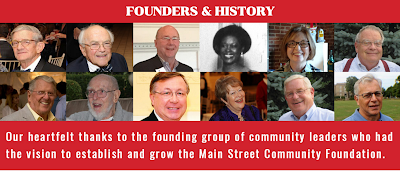
  • Main Street Community Foundation
    "MSCF is now recognized as an organization that knows about our community needs, and can help area citizens with charitable ventures whether funds are set up or not."
What exactly is this proposal supposed to be fnding? (Click here for bill status)
The interesting thing about the Main Street Community Foundation being a participant in the program is that there are members of Bristol's boards and commissions as well as elected representatives that founded the nonprofit.
Perhaps they know more about the program and the direction we are headed than the electorate.  If that is the case then we have a lot to unwind before anyone can claim that the public is aware of, participated in or supports this endeavor.

I wonder if and when the residents of the city will become part of the process? Will the residents' role in the planning of this public project be reduced to an anonymous survey or will proper outreach efforts be taken to include the public?  I would like to remain optimistic but there has not even been an acknowledgement that there is a transit-oriented project being worked on so I am not confident that best practices will be incorporated.  Recent proposals to incorporate another overlay zone in Bristol without explanation as to it's purpose only exasperates these concerns.

  Bristol is one of sixteen Connecticut municipalities selected for this program.  Other communities include Bridgeport, Danbury, East Hartford, Hartford, Manchester, Meriden, Middletown, New Britain, New Haven, New London, Norwich, Torrington, Waterbury, West Haven, and Windham.  Let us hope that if this grant is awarded that the citizens of the community are not hand-picked to participate while others are left in the dark.  Unfortunately that's how this all appears to be playing out.

Sunday, January 29, 2017

Overlay Zones, Busways, Public Info. & Railroading

   Where exactly is the new Overlay Zone proposed for the Farmington Avenue going to lay? Will this new zone change allow for buildings much higher than the current regulations?  Will it allow development that obstructs views or broadcasts unwelcome light or sound?  Will it lead to more traffic congestion? Will it allow people to subdivide and sell their properties in all areas of Route 6? Property owners want to know how these future plans are going to affect their own future and the values of their properties.  So after waiting more than ninety minutes to bring their concerns forth, they did so hoping their questions could be answered.  For the most part they were not.  Residents were allotted three minutes and spoke beyond that time limit but the responses and discourse was minimal.

The Special Meeting of the Planning Commission began with a 1-hour presentation of the recommendations from Fitzgerald and Halliday for the future of Bristol along Route 6.  The speaker seemed to be addressing the commission during the majority of the presentation.  It became clear that she was when she asked if there was still any concerns about the increase in density.  Our city planner responded that this concern was brought up by a resident.  The meeting then moved on without discussion of the issue.


There was little indication nor discussion from the city planner nor any members of the Planning Commission as to what purpose the creation of an overlay zone would serve during the Special Meeting on Wednesday January 25th.  In fact, the only members of the commission that indicated any concerns at all during this meeting or last December's were Commissioner Andrew Howe and City Engineer Paul Strawderman.  Of course this would make any resident feel uneasy about trusting this new proposal will not have a negative impact on their quality of life. 


Why would the city propose an overlay zone instead of just making a general zone change or allowing new development by special permit process?  The city planner's explanation during the meeting was that it would provide flexibility of having two possible options but we do not know what the intention nor specifications of these new options are.  I asked at the meeting but I was not afforded an answer.  I therefore had to ask Google.  


According to information aggregated on the website TransformingBristol, Overlay Zones are for:
*Development in Environmentally Sensitive Areas (most common use) 
* Protection of Historic Districts in Development Areas 
*Encouraging Dense Cluster Development Along Bus or Rail Corridors
...for more about Overlay Zones click here.
The top result of the Google search, "Why an overlay zone" produced the following information:

"CREATION
Any governmental unit with the power to create zoning districts can create an overlay district. There are three basic steps to creating an overlay district:

Define the purpose of the district. The district should have a clearly defined purpose e.g. to protect drinking water, preserve historical character, minimize erosion from storm water runoff, etc. Identify the areas that make up the district. Mapping district boundaries will depend on the natural or cultural resources and the geographic areas that relate to achieving the purpose of the district. For example, if the purpose of the zone is to protect groundwater, important groundwater recharge areas and areas prone to pollution, such as fractured bedrock or areas with a high groundwater table should be mapped.. Develop specific rules that apply to the identified district. In a groundwater recharge district for example, provisions may restrict development or require development guidelines that capture and filter water runoff.. 
It is critical that the zoning provisions offer clear guidance to both property owners and the governing body charged with approving proposals. Zoning requirements must be applied equally over all properties within the district. The ordinance not only must comply with any state and federal regulations, but must also be consistent with the goals, objectives, and policies of the municipality’s comprehensive plan. It is important that the local governing body involve the public to clarify issues and explain the reasons behind mapping district boundaries.

An educational program targeting developers and affected property owners will help increase awareness and compliance with the new requirements. The procedures for adopting an overlay district are the same as for adopting a zoning or rezoning provision. The overlay provisions as well as changes to the zoning map must be approved by the local governing body for adoption."

Image from top search result
   
  I'm not convinced that the City of Bristol has sufficiently undertaken these efforts.  There is still time for sufficient public outreach, healthy public discourse and informing of the affected public about the details of this overlay zone.  

What actions do you feel that study stakeholders and city officials should take to ensure an amiable outcome in this situation prior to the adoption of the plan?  Will we see statutory minimum efforts or outstanding makings of an "A" effort?  Time will tell.


Sunday, November 1, 2015

Enemies of An Open Society: Downtown Deception Pt. 1

Upon visiting one of Bristol's greatest assets called the local library, I found a fascinating book called The Open Society and It's Enemies.  After reading the first few chapters I found myself relating what I was reading to the rockiest and roughest outcrops of Bristol's political landscape infrastructure.    It had me thinking about the suggestion I have received from some members of the public that perhaps it's come time to start talking about the actions of some individuals and what length some will go to in order to protect their agenda.
Have THEY engaged in an effort to derail and deride any opposition or independent thought regarding Bristol's redevelopment?
This group of people whom seem to be in a position where they have a great deal of information about the future of Bristol.  One can only wonder why they're not sharing the details with the general public.


These people are intricately involved in the process.  They should be explaining the benefits of the projects they are advocating for and clarifying the facts with the public.   They are instead focusing all of their effort on trying to discredit those asking questions.   They refer to those opposed to implementing a centrally planned top-down agenda in downtown Bristol as anti-investment, downtown conspiracy theorists, self proclaimed messiahs with ridiculous claims of lack of transparency whom are suffering from irrational paranoia from contrived conspiracies about government cabals trying to get people to give up their cars and get onto public transportation and into dense urban environments.


They claim, "There is no connection between the busway and the RD plans other than old commentary. "  Most incredulously, they stated that "Depot Square is not about transportation."
They also say,  "These folks need to stay off the internet. "

Well, IT IS amazing what you can find on the net.

Let's compare some of their quotes to reality.


In this chart from Bristol's former Master Developer, we can see a graph of a public-private partnership that Renaissance Downtowns calls The Unified Development Approach.  Members of this group of stakeholders have a profound understanding of the development process that Bristol has embarked upon.  Despite the assertions of some members of this group, one can plainly see that the transit agency is a key component in this type of development.

With public ire reaching frenzy levels regarding the planned downtown housing project in the local Bristol Press blog, I called for a town meeting to clear the air.  It never happened.  Can you fathom the reason?  According to one source, Bristol's former mayor told city councilors in 2013 "not to talk about" the details of the project.  One can see in section 3 in the meeting minutes below that the plan is to alter the regional demographics.  Stakeholders in attendance at the meeting must certainly be able to explain the role that demographics plays into this downtown scheme and have been asked to do so.  Instead they have resorted to a tirade of demeaning members of the public.   If the partnership they support provides the transparency they claim then why hasn't the public been informed of these details?


Stakeholders have asserted that the Depot Square plan is not part of a larger plan.  One can clearly see that the Central Connecticut Comprehensive Economic Development Strategy (CEDS) is indeed part of the incorporation of an integrated regional plan.  One can find that much of these regionally planned projects have been spun like a web into some local political campaigns,   It appears that some want to take credit for following a carrot on a stick and pretend these projects were their own idea.


One has to wonder how a weekly writing spinster whom claims that the mayor is part of a cabal that lacks transparency can publicly claim that the Depot Project has nothing to do with transportation.  The following downtown CEDS projects "may be seen as interrelated", according to the description from regional planners.  Do I need special glasses for the vision to see it this way or are members of the public excluded from this perspective?  Perhaps only the members of this exclusive and elusive group are allowed to see or speak of it?


Structured parking has only recently become part of the city's Plan of Development but it has appeared for years in the 2011 CEDS report.  Structured parking, high-density housing and public transportation are integrated in the plan and described as supportive of each other.  The downtown transportation hub is described as intermodal.  Is this about transportation?  Do you believe the local commentary and opinion or the state and regional documents?

Commentaries and annual reports are worlds apart.  Do you believe that the reorganization of planning organization to Councils of Governments renders all previous plans and documents irrelevant?  Some stakeholders have implied so.  Do you believe that the Depot Square Project has nothing to do with transportation just because they said so?


Yes it is true that the Central Connecticut Regional Planning Agency is now defunct, but it is clear that the agendas of some have not changed.  Despite claims from the self-proclaimed seeker of transparency, the Central Naugatuck Valley COG did not assume Metropolitan Planning responsibilities for Bristol until July.  The Capital Region Council of Governments MPO 2016-2017 Unified Planning Work Program  document refers to their support of the Depot Square project and the implementation and compliance of the Complete Streets law.  The CRCOG is working to integrate projects in the Sustainable Knowledge Corridor, implementing Transit-Oriented projects on the from the regional level on down to Bristol.


The Department of Transportation's website says that they adopted the Complete Streets policy in October of 2014.  The report states that the prime consideration of motor vehicle users when designing of roads, "has led to a motorized vehicle dependent society."  This is the same philosophy that can be found in many of the city's planning documents as planners would have you believe that it is societal habits and not the conveniences of personal transportation or the inability to afford it that lead people to live with or without an automobile.

Even the 2011 Downtown Concept Plan Submission from Bristol Rising (whose public relations liaison was employed by Renaissance Downtowns) mentions that some are seeking alternatives in life and transportation to the "car-crazed lifestyles" of personal transportation.  I have yet to meet someone in Bristol whom is an advocate who will "lead by example" in this manner.  The advocates all seem to want to plan this for someone else to live in.


This "freedom from auto dependence" is supposed to be what allows the disposable income that provides the boost to the local economy.  Do you think that that such a development sounds like something that will be affordable housing for teachers, police officers and other people of similar wages?  Perhaps we should ask the people involved in the Unified Development Approach who don't claim that the project has nothing to do with transportation.  Where are they? 

Sunday, May 17, 2015

Bristol's 10 year Plan of Development: A Documented Authoritarian Agenda

As pictured in the Renaissance Downtowns' Comprehensive plan, the Plan of Conservation and Development is a focal point in the redevelopment of Bristol. According to State of Connecticut Statutes, the POCD shall "...be a statement of policies, goals and standards for the physical and economic development of the municipality, ..."  It appears to be out of balance as housing is mentioned nearly 100 times more than jobs in the document.   From the beginning, it would appear that the outcome of the plan has been predetermined in part long before the public participation process began due to state mandates.  My perspective has not changed.
This blog is an effort to extirpate the data and identify the top-down central planning as well as the bottom up grassroots input in an effort to preserve what representation the general public has.  As you can see in the diagram on the right, Renaissance Downtowns' development strategy was inserted into the original draft of the Plan of Development.  It was subsequently removed as controversy over the developer surfaced.

The first public workshop for the POCD was supposed to be an effort to provide public input into the plan.  As you can see from the images below, the members of the public were outnumbered by members of Bristol's Planning Commission and some of their family members. There were about five Bristol residents whom attended as well as one member of the local press.
Glen Chadler of Planimetrics graciously granted me a short interview prior to the workshop commencing.  In conversation after the interview, he agreed that it was unfortunate that so few members of the community were in attendance for the workshop.  An article in the local paper can have a significant impact on the drawing of attendants.  Unfortunately that did not happen in Bristol he indicated.  There were however a few "Bristol Rising" members in the audience whom were apparently prompted of the event and their input can be observed in the final draft policy document.


Some residents played connect-the-dots while placing the dots on the map.


What I found to be quite astonishing was the representation of paper money as an indicator of development preference.  I can only wonder if the participants associated their choices with the high costs to bring it to fruition.  Of course, as the federal reserve has shown the American people as of late, when it comes to paper money, money is no object.  I wanted to put the whole booty on "sprawl development" but there was no option to do so.  Therefore I kept my booty as a souvenir and chronicled in video.


As you can see from the thumbnail below, residential development and housing diversity received the smallest pile of loot regardless of the attendants.  This further supports my assertions that high-density apartments are not what Bristol residents support for future development.  Among those whom commented at the meeting were two non-residents.  One is in the real estate market and the other is an investor for the downtown development. Their input is represented in the final document.


The city has had several special meetings of the planning commission dedicated to the Plan of Conservation and Development's creation.   As the only member of the general public in attendance, the chairman allowed me to participate in the discussion after raising my hand.  I had encouraged others to attend as well to provide their input but many were convinced that the plan had little to do with the downtown project as residents were encouraged to attend the Downtown Development Corporation's public meetings to voice their concerns.  There were however a few meetings that brought a few looking to provide their input.  At the first meeting that this occurred the was a heated debate about the encouragement of density development in the neighborhood of one very concerned resident.


The outcome was not a favorable one.  At least one member of the commission insisted that the meeting was not a public hearing and therefore public comment should not be allowed.  This was contested by myself as the City Charter states clearly:
"Sec. 49. - Boards and commissions. Meetings. All board meetings shall be public and all meetings of boards or commissions whose duties involve the transaction of public business shall be held at accessible stated public places and all meetings and the minutes thereof shall be open to the public. Any elector shall have the right to appear and be heard at any such meeting as to any business proper to come before said board or commission."


Upon entering the next meeting we found these signs posted.  There is technically nothing wrong with the rules that were applied as they do in fact comply with the charter.  The unfortunate thing is that there were four members of the public that attended with the intention of offering some input.  After an hour of patiently waiting they left, never to return.  This drew the ire of more than one resident whom found the action reprehensible.  Some resident prefer not to comment prior to a meeting.  Does two hours or more wait to make public comment constitute any form of accommodation in your opinion?


The video below illustrates how the language contained in the Plan of Development has an effect on the gathering of capital.   Should this fact shadow the will of the residents who provided input?  The outcome of the POCD hearing and adoption shall in this case put an important question to the test.


The representative from the City of Waterbury on conference call is concerned that the Regional Council of Government's municipal members' Plans of Development are in compliance with the State's Plan of Development in the video below.


The question to be tested is :
"Is Bristol's Plan of Conservation a top-down plan or a bottom-up one?"


The issue of municipal control vs. regional control in the planning process is discussed by Council of Governments of the Central Naugatuck Valley members at their second meeting in the video below.  Municipal plans are designated as policy documents by Connecticut general statutes.  The City of Bristol recently joined this COG as the state realigned planning agencies in a manner that some say resembles county government. A few bills moving through the state legislature would solidify this transformation.  Some legislation would open the floodgates for Tax Incremental Financing for municipalities in the State of Connecticut without the oversight of the state nor protections of citizen-driven referendum.  These funding mechanism have bankrupted many a California city for specifically the same purpose they are being pushed in Connecticut:  To fund Transit-Oriented Development projects.  .  The stakes are high for those living paycheck-to-paycheck.


As you can see in the video below, the City of Shelton's planning board representative indicates that their planned development allows the municipality to keep social services down.  Shelton's tax rates have been consistently low without an increase in mill rate for 20 years.  The city is growing faster than any other in the COG.

Bristol's approach in the Plan of Development appears to be a sharp contrast to that.  A municipality with more affordable housing than all surrounding towns appears on the path to create more.  Of course, the plan is not limited to the Depot Square parcel.  The map below indicates the downtown "Enterprise Zone" may be a future "Housing Opportunity Zone."  Housing Incentive Zones are customarily created to draw transit-oriented development to a municipality because low-income riders are the demographic that primarily occupy buses on off-peak operation hours and are typically included in transit-oriented projects due to federal mandates.

 WILL STATE GUIDELINES FORCE MORE AFFORDABLE HOUSING TO BE BUILT IN BRISTOL?

Municipal plans of Development serve as a guide for regionally planned projects in regional centers such as Bristol's downtown.
Section 10 of Bristol's NEW 2015-2025 Plan of Conservation and Development's, "GUIDE RESIDENTIAL DEVELOPMENT" section states:
"As of 2014, approximately 13.5% of Bristol's housing stock was considered affordable (governmentally assisted or available to moderate income house‐holds), based upon the definition of "affordable housing" established under Section 8‐39a of the Connecticut General Statutes. The state minimum threshold for affordable housing is 10%. Bristol's affordable housing stock also exceeds the state average as well as that of surrounding towns.
"Only About 5 percent of those surveyed for the Plan of Conservation and Development identified a price‐related housing arrangement (affordable,subsidized, family) as their next housing choice.
HOWEVER, in accordance with the State of Connecticut's General Statutes 8-23, the Municipal Plan of Conservation and Development MUST :
"Show concentration of development around transportation nodes and along major transportation corridors to support the viability of transportation options and land reuse
*Show the commission's recommendation for the most desirable use of land within the municipality for residential, recreational, commercial, industrial and other purposes and for the most desirable density of population in the SEVERAL parts of the municipality.
*be designed to promote with the greatest efficiency and economy the coordinated development of the municipality and the general welfare and prosperity of its people.
*integration of planning across all levels of government to address issues on a local, regional and state-wide basis,
*make provision for the development of housing opportunities, including opportunities for multifamily dwellings, consistent with soil types, terrain and infrastructure capacity, for all residents of the municipality and the planning region in which the municipality is located, as designated by the Secretary of the Office of Policy and Management under section 16a-4a,
*promote housing choice and economic diversity in housing, including housing for both low and moderate income households, and encourage the development of housing which will meet the housing needs identified in the housing plan prepared pursuant to section 8-37t and in the housing component and the other components of the state plan of conservation and development prepared pursuant to chapter 297.
*In preparing such plan the commission shall consider focusing development and revitalization in areas with existing or planned physical infrastructure."
THESE STATE RECOMMENDATIONS ARE FOUND IN OUR PLAN FOR THE NEXT 10 YRS OF BRISTOL'S DEVELOPMENT
In section 10.2.2. of the POCD, "Housing Design" it is stated,
"Encourage the appropriate design of housing in order to meet community needs in the future.
In section 10.2.3., "Housing Diversity", it is stated, "Encourage the provision of a diverse array of attractive, decent, safe and sanitary housing to meet the social and economic needs of Bristol’s current and future population."
and in Section 10.3.3., "Housing Diversity", it states.:
1. Encourage the diversification of the local housing stock in appropriate locations (such as near services and/or transit) to meet the changing housing needs of current and future residents.
2. To help address current and future housing needs, consider permitting multi‐family development of appropriate density and design to be located:
in downtown Bristol in mixed use buildings,
along major commercial highway corridors, and
in other business districts or other suitable locations.
3. Strive to encourage the provision of:
affordable housing for the elderly who need it,
and affordable housing for families and individuals who need it.
THIS IS ONE-SIZE-FITS-ALL POLICY! Bristol ALREADY has more than it's fair share of diverse affordable housing stock!
Bristol's Final Draft of the Plan of Development identifies the local area's percentages of affordable housing as follows.:
Bristol 13.45%
State 11.26%
Farmington 7.73%
Plainville 7.44%
Plymouth 7.11%
Wolcott 7.11%
Southington 5.71%
Burlington 2.04%

Bristol's percentage of multi-family also exceeds both state averages as well as the percentages of surrounding towns. The Final Draft of the Plan of Development identifies those town's percentages of Multi-Family housing as follows.:
Bristol 39%
State 35%
Plainville 25%
Farmington 24%
Southington 16%
Plymouth 14%
Wolcott 12%
Burlington 7%

Bristol's percentage of renter-occupied housing also exceeds both state averages as well as the percentages of surrounding towns. The Final Draft of the Plan of Development identifies those town's percentages of renter-occupied housing as follows.:
Percent Renter Occupied 
Bristol 33%
Plainville 32%
State 32%
Farmington 23%
Southington 19%
Plymouth 18%
Wolcott 10%
Burlington 4%

  One of the major problems with these Plans of Conservation and Development is that they are all basically identical in the manner that they dictate state policy of mixed-use transit-oriented development, which is the hardest type of development to find investment capital for.  The state government that mandates the mixed-use smartgrowth development subsidizes it on the state level, encourages municipalities to further subsidize it with bonding, tax-incremental financing and future revenue schemes that place all the risk onto taxpayers. These types of projects are also inclusive of "affordable housing".  What people need to ask themselves if they themselves want to live in a mixed-use public-transit-oriented community of dense development (such as the urban centers in the state that are already well established in a natural fashion) before they consent to funding it.  Otherwise they may find themselves or their neighbors eventually forced out of their homes and into one of these developments due to the state's oppressive tax climate with more increases in the way.

As the survey indicates,  less than 40% of residents in Bristol are working full-time and are likely on a fixed budget.  Bristol is also the 13th most distressed community in the state with an average of one home foreclosure per day in the last quarter of 2014.  Many are at a financial tipping point and this is likely the cause of the population decline as of late.  Only jobs will stimulate real growth in Bristol.


Many have been silent about how the Plan of Development relates to Forestville.  The city has apparently worked with a small group of individuals and organizations to complete a Forestville Plan that contains much of the same language as the plans for the Depot Project and the 2011 West End Plan that includes the straightening of route 72 and the "recently proposed" "bicycle paths".  Like Newington, the plan will likely create two new urbanized areas along the busway as planning documents indicate.


  Perhaps mandated, perhaps because of the low participation rate of the workshop, or perhaps it is a standard of practice, but for whatever reason the City of Bristol had a telephone survey of Bristol residents completed to provide input into the Plan of Development.  Four-hundred heads-of households' answers were included in the raw data and conclusions.  At this point one can again see the apparent disconnect between the respondents' answers and the POCD's conclusions.  Development strategies can be seen in the outline to the right.  The following images are from the raw data from the survey from Great Blue Research.  The conclusions of the raw data surveyed from the contracted firm greatly differ from those in the city's POCD and I found it necessary to contest it in several forums both online and at city meetings.  The will of residents should be upheld!

The survey data solidifies the conclusion that the residents of Bristol DO NOT support the expansion of affordable housing in Bristol's downtown or on the Depot Square parcel.  This is VERY relevant to the incorrect assertion in the plan that the desire to see development of the site is synonymous with the creation of high-density housing on the parcel and surrounding area.
Some members of the community objected to contesting the conclusions of the survey.  Should it's ability to attract market capital for something that the residents do not want take precedent over the preservation of representative government and the ability of the public to access public information for a survey commissioned with taxpayer money?


One member of the public addressed the issue of the lack of public outreach at the second POCD workshop.  It would cost the city little money to advertise the opportunity to participate.


I took upon an effort to bring the raw data to the attention to the general public on a few of Bristol's social network groups.  That effort was met with hostility by a select few individuals.  The screenshots, data and links were subsequently deleted.   The sad fact is that public discourse is consistently stifled when it comes to the TOD Agenda in Bristol's social networks.  Some dissenting opinions led to the removal of individuals and a "no arguing with the administrator" policy.  Even more disturbing is the statements and assertions of some of these individuals.   Is "see no evil, speak no evil, hear no evil." their policy?


  One would expect those whom are advocating for your tax dollars to be spent on the Housing Agenda would know all of the details but they refer to facts as opinions, documents as unrelated and defunct, and state policies as conspiracy theories.  These propagandists use their slogans and narratives to back up their assertions.  Any debate must be pointed towards agreement... or else.

Apparently blind with positivity, this faction of the cabal insists this is the only way.  The consensus in some circles is that their goal is to promote the agenda of high-density housing in Bristol and to immediately stifle any dissent with ridicule.  These are the hallmark tactics of  left-wing radicals.     When confronted with a direct question or logical argument, their actions replicate Saul Alinsky's Rule For Radicals #12.
As Wikipedia defines it :


“Pick the target, freeze it, personalize it, and polarize it.” Cut off the support network and isolate the target from sympathy. Go after people and not institutions; people hurt faster than institutions."

Sadly,  public officials are members of these social networks but fail to make statements about the assertions.  They remain wholly silent on the issue.

The tactic is as cookie-cutter as the TOD agenda itself and they go hand-in-hand with the agenda.   It is best described by Newington resident Gail Budrejko who states that city taxpayers in their town have been labeled negative, fear-mongerers, and cop-outs, and been labeled as trouble makers for attending public meetings and raising their concerns.
"Labeling and name calling is an infantile and divisionary tactic often used                    when people don't have facts to support their position. "  


Who can disagree?

Mrs. Budrejko also asserts that the city wholly ignored the survey results in proceeding with Newington's high-density busway-oriented agenda.   Ironically, their Plan of Development was also performed by the same company as Bristol's.  Their fight to preserve their town has reached a tipping point.  Will it be too late for Bristol?

It would seem that the ONLY thing important to some Bristol officials is the Sustainable Development project for Depot Square.  They claim they are trying to grow Bristol but what they are doing is limiting choices as to where and what businesses can be established. .  Could this perhaps be the main cause of the lack of growth in the development in Bristol?


  Some well known businessmen in the city seem to think that is the case according to their testimony at the Plan of Development hearing on June 3rd.  The public hearing is a state requirement.  As indicated in the statute,
" A plan of conservation and development or any part thereof or amendment thereto prepared by the commission or any special committee shall be reviewed, and may be amended, by the commission prior to scheduling at least one public hearing on adoption."


Bristol's Plan of Conservation and Development covers not only the downtown, but the entire city and it's development for the next decade.  It is also a legal document that the state uses to claim their housing agenda is a bottom-up or grassroots plan.  The author of this blog concurs that is far from the truth.  As I have previously stated, the PoCD is a document that is used in consideration of the receipt of grant monies as clearly indicated by the grants administrator of Bristol's testimony at the PoCD hearing.


I admire the woman's honesty and she is doing precisely what her job entails.  But if the PoCD is a document that is to represent a "vision", but the question remains, "Whose vision should it represent?".  Section 8-23 of Connecticut's General Statutes states that the PoCD must consider "social, economic and governmental conditions and trends," 
Just exactly should these social trends to be obtained from in a bottom-up document?  The Plan of development according to state statute also shall,
"be designed to promote, with the greatest efficiency and economy, the coordinated development of the municipality and the general welfare and prosperity of its people and identify areas where it is feasible and prudent."


Will the final document do so?

Friday, November 28, 2014

How Special Interests Stole Bristol


"Gifts" From Government


Bristolites like small-town character a lot...
But a group of transformers with big plans do not!
As those who asked why, weren't provided a reason.
The transformative plan does not fit locals' pleasin'.
The upscale shopping was hook, line and sinker,
But the mass of apartments and debt was the stinker.

It could be their heads weren't screwed on just right.
It could be Southeast Business Park debts were too tight.
Or perhaps that the state offering cash was too tempting,
For those special interests whose taxes we're exempting.

But those watching their budgets watched details get buried,
A public purse handout despite promised contrary.
Officials hoped opposers would be kept at bay,
And pull like a small dog with overweight sleigh.


Whether well intended, misguided, without choice or confused,
They pretended that there could be nothing to lose.
Sixty-thousand tax dollars and no input from town,
They renamed "Mum City"  "All Heart", (doubled down)


So despite the predominant public dissension,
Subsidized infrastructure and a contract extension,
They said that two million was all we were funding,
In an effort to stop referendum from coming!


Then they claimed that the public and the markets had both,
Guided smartgrowth and the walkability approach.
And as those who weren't Gruber-ed knew better before,
The piazza promise was revoked evermore.

For the visions projected were on the back shelves,
And left for taxpayers to finance themselves.
And even more telling something was amiss,
The Fastrak was coming, Transit-oriented-ness.


So with free land and cash for a pie in the sky,
Residents demand the who's whos tell us WHY!

They claim, "It pays for itself with new tax revenues,"
"Just a smidgen of help, a few dollars of dues ."
"For a small group of people knows better than you"
"What Bristol wants, needs, and what it should do"

The plans for dense housing and increased population,
A social justice ladder of public transportation,
Is supported by those who have something to gain,
Denouncing the busway and pleading for train,

For instead of a focus on high unemployment,
They offered "vibrancy" to entice your endorsement.
For the property values near transit are higher,
Perhaps some will "flip" Bristol, then move to retire.

Then it's likely high crime rates and taxes ensue,
And force out Cindy, Lou and me and then you.
For grants from government aren't from Santa Claus,
They aren't gifts at all, they are DEBTS, bound by laws,
That take Christmas gift money from struggling residents,
And give them to agenda enablers as presents.


Perhaps Bristol's true heart, doesn't come from a plan.
From big government, developers, or their marketing man.
Maybe Bristol...perhaps...needs a little bit more!
The will of the residents should be restored!

(Needs three sizes more)