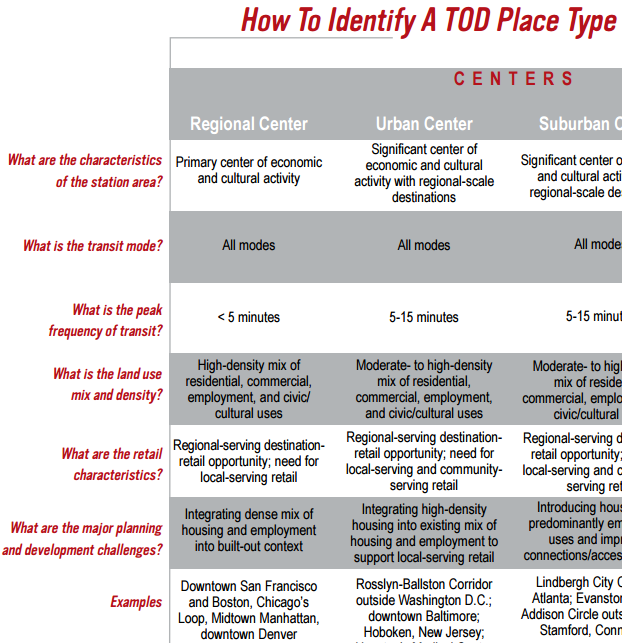
Is the new Centre Square Plan the same as the old Depot Square Plan? I found many significant similarities. If you take a look back at the Environmental Impact Evaluation (EIE) sponsored by the State of Connecticut Department of Economic and Community Development in August in 2010 you will find that the 17 acre parcel was part of a submission for a Challenge Grant for a Transit Oriented Development (TOD), mixed use intermodal transportation center.
According to the CT Department of Economic and Community Development (DECD) website, the projects' objectives were to,
"...align(s) with HUD’s livability principles to provide more transportation choices. By planning and developing mixed-use, walkable, transit-oriented, and denser communities in the station areas...the project will help provide more transportation choices to a greater number of people. ...DECD and its partners are promoting projects that are closely aligned to the HUD-DOT-EPA livability principles, which will help leverage federal investments. Since the adoption of the state’s smart growth policy, DECD has funded several TOD, mixed-income, and mixed-use development projects and is using the requested grant to leverage its investments.... and promoting equitable and affordable housing is discussed in more detail..."
The EIE Review notice posted on the State of Connecticut's Council on Environmental Quality's website indicates that the deadline for comments on the plan was October of 2010. The state requires the EIE due to the project's impacts on (among other issues) , "ambient noise levels, historic, archeological, cultural, or recreational resources, disruption of an established community or neighborhood, displacement or addition of substantial numbers of people, or a substantial increase in traffic." Because such projects require public funding residents are entitled to a public hearing if twenty-five residents or an organization representing more than 25 residents request one. Do you remember hearing about this? The law requires it be posted outside the clerk's office and I'm sure it was but I'm not sure that has any impact on how many residents of Bristol knew. It seems that, with but a few exceptions, the only time that numerous city officials actively encouraged residents to attend meetings about downtown Bristol that they were directed to the meetings for Bristol Rising whose meetings took place outside the framework of our government.
This EIE performed by Fuss & O’Neillis cited in the City of Bristol's Request for Proposal (RFP) for "Professional Services Relative to Redevelopment of Downtown Bristol" posted on February 9th of 2016resulting in the selection of Milone and MacBroom for site design for the Depot Centre Square site. The environmental impacts of the proposed project to which the RFP refers to includes residential development as well as 50,000 square feet of office space.
The "new" proposal from Bristol Hospital and it's developer Rendina for a medical office building is tailored to accommodate a building of this size according to a recent resolution from Bristol Development Authority.
The Purchase and Sale Agreement Draft for the Bristol Hospital deal refers to both the bus stop relocation as well as the allocation of 3.5 parking spaces per 1,000 sq. ft. of building space. Both details are significant.
The City of Bristol's Parking Study for Depot Square prepared by Tighe & Bond in 2010 also indicates plans for 55,000 square feet of office space as well as citing changes to Bristol's zoning regulations to reduce parking requirements for medical office buildings to 3.5 spaces per 1,000 square feet. Coincidence?
The utilization of roadside space on Riverside Avenue for on-street parking is also mentioned in the 2010 document as well as in the current plan for the parcel.
What has changed? Housing? Transit? Parking?
As many residents have recently learned, the first phase of the project includes a transit stop in the center of the project site much like the Concept Plan created by Bristol Rising dated April of 2011 only it is now oriented around the CTFastrak instead of a rail station. Because of the lack of population density to quantify the investment for light rail, this was likely the most probable outcome in pursuit of a TOD project in downtown Bristol. The name may have changed but the game is the same. The Depot is still at the literal Center of the Project.
Some officials still continue to refer to the workshops and public outreach of Bristol Rising, (the community engagement group created by Renaissance Downtowns to gather community input and incorporate it into the plan), as the basis for the current plans for the development of the downtown. Yet the Concept Plan presented to the public was not published until eight months after the EIE proposal was submitted. How then could one possibly say that the basic elements of this project were derived from all of the members of the community? You can see mention of a "strong residential component" in the image above.
In 2013 the City of Bristol made changes to it's Zoning Regulations that accommodate higher density residential development. These changes encourage the development of more affordable housing. Many people fail to recognize that none of that has changed.
One can find these same goals now continue to exist in city plans made after the departure of Renaissance. Bristol's 10 Year Plan of Conservation and Development, "is used to guide land use decisions and regulations, coordinate development activities within the city as well as provide programs for implementation." according to the city's website. The establishment of a multimodal transportation center as well as encouraging the provision of new housing units in appropriate areas in downtown Bristol is included in this 2015 document.
Seemingly from out of nowhere, (like the Bristol Rising Concept Plan and like most other TOD projects) bicycle and pedestrian amenities have been integrated into the Centre Square Project. The Preliminary Draft incorporates the equal sharing of space with automobile-oriented and non-motorized visitors in multimodal fashion. Do you know where this idea came from?
There are some more interesting facts contained in the Environmental Impact Evaluation dated August 2010, which can still be found on the city's website. Here are a few worthy of thought.
They illustrate the many things decided about the development prior to 2011 have not changed.
A $14.3 Million renovation for a 500-750 seat Community Arts Center, a 40,000+ sq. ft. office building, an on-site structured parking during Depot Centre Square Project build-out, concerns over an increased demand on the area's healthcare system due to an increase in housing units, and a clue as to what the changes made to the zoning downtown can bring are included in the documents. Exactly what Public-Private Partnerships can do in Bristol is mentioned in a publication from an Architecture Faculty Member of the City College of New York's June Williamson and Professor of Architecture and Design at the Georgia Institute of Technology's Professor Ellen Durnham-Jones' Retrofitting Suburbia. Bristol Connecticut is mentioned in the book under the heading The Public Sector Takes the Lead. "Developer Donald Monti of Renaissance Downtowns similarly blurs the conventional lines between public and private in his partnerships between public and private in his partnerships with small suburban cities, such as Bristol, Connecticut...Other downtown property owners are also invited into the arrangement."The Director of Bristol's Development Authority has recently stated that no kind of development has been ruled out. What do you expect will develop under these conditions and exactly who did you expect to be interested in doing so? Executive sessions for such projects may leave the public in the dark but needn't leave them unable to see what lies before them.
Where exactly is the new Overlay Zone proposed for the Farmington Avenue going to lay? Will this new zone change allow for buildings much higher than the current regulations? Will it allow development that obstructs views or broadcasts unwelcome light or sound? Will it lead to more traffic congestion? Will it allow people to subdivide and sell their properties in all areas of Route 6? Property owners want to know how these future plans are going to affect their own future and the values of their properties. So after waiting more than ninety minutes to bring their concerns forth, they did so hoping their questions could be answered. For the most part they were not. Residents were allotted three minutes and spoke beyond that time limit but the responses and discourse was minimal.
The Special Meeting of the Planning Commission began with a 1-hour presentation of the recommendations from Fitzgerald and Halliday for the future of Bristol along Route 6. The speaker seemed to be addressing the commission during the majority of the presentation. It became clear that she was when she asked if there was still any concerns about the increase in density. Our city planner responded that this concern was brought up by a resident. The meeting then moved on without discussion of the issue.
There was little indication nor discussion from the city planner nor any members of the Planning Commission as to what purpose the creation of an overlay zone would serve during the Special Meeting on Wednesday January 25th. In fact, the only members of the commission that indicated any concerns at all during this meeting or last December's were Commissioner Andrew Howe and City Engineer Paul Strawderman. Of course this would make any resident feel uneasy about trusting this new proposal will not have a negative impact on their quality of life.
Why would the city propose an overlay zone instead of just making a general zone change or allowing new development by special permit process? The city planner's explanation during the meeting was that it would provide flexibility of having two possible options but we do not know what the intention nor specifications of these new options are. I asked at the meeting but I was not afforded an answer. I therefore had to ask Google.
According to information aggregated on the website TransformingBristol, Overlay Zones are for:
*Development in Environmentally Sensitive Areas (most common use)
* Protection of Historic Districts in Development Areas
*Encouraging Dense Cluster Development Along Bus or Rail Corridors
...for more about Overlay Zones click here.
The top result of the Google search, "Why an overlay zone" produced the following information:
"CREATION Any governmental unit with the power to create zoning districts can create an overlay district. There are three basic steps to creating an overlay district:
Define the purpose of the district. The district should have a clearly defined purpose e.g. to protect drinking water, preserve historical character, minimize erosion from storm water runoff, etc. Identify the areas that make up the district. Mapping district boundaries will depend on the natural or cultural resources and the geographic areas that relate to achieving the purpose of the district. For example, if the purpose of the zone is to protect groundwater, important groundwater recharge areas and areas prone to pollution, such as fractured bedrock or areas with a high groundwater table should be mapped.. Develop specific rules that apply to the identified district. In a groundwater recharge district for example, provisions may restrict development or require development guidelines that capture and filter water runoff..
It is critical that the zoning provisions offer clear guidance to both property owners and the governing body charged with approving proposals. Zoning requirements must be applied equally over all properties within the district. The ordinance not only must comply with any state and federal regulations, but must also be consistent with the goals, objectives, and policies of the municipality’s comprehensive plan. It is important that the local governing body involve the public to clarify issues and explain the reasons behind mapping district boundaries.
An educational program targeting developers and affected property owners will help increase awareness and compliance with the new requirements. The procedures for adopting an overlay district are the same as for adopting a zoning or rezoning provision. The overlay provisions as well as changes to the zoning map must be approved by the local governing body for adoption."
Image from top search result
I'm not convinced that the City of Bristol has sufficiently undertaken these efforts. There is still time for sufficient public outreach, healthy public discourse and informing of the affected public about the details of this overlay zone.
What actions do you feel that study stakeholders and city officials should take to ensure an amiable outcome in this situation prior to the adoption of the plan? Will we see statutory minimum efforts or outstanding makings of an "A" effort? Time will tell.
Have you heard in the local paper about the Route 6 Corridor Study? The story mentions a few aspects of the study recommendations from the commissioned firm Fitzgerald and Halliday. It mentions that the study draft recommendations include recommendations to make Route 6 more "walkable". I'm not sure the study was necessary to reach that conclusion as one can clearly see that some of the major intersections lack proper crosswalks as well as functional crossing signals. But as our former city planner Alan Weiner once stated, the study IS NOT about traffic but instead about DEVELOPMENT along this corridor. Specifically, the Draft Recommendations of the plan refers to walkability as to, "Encourage compact, mixeduse,
and walkable
commercial centers/clusters."
Not surprisingly, this plan for Route 6 appears to have been coordinated with some regional transportation planning. The study map seems to indicate that there are three new proposed bus shelters and a pull-off within a quarter mile of the city's methadone clinic. So it is not surprising to see that the city study suggests to "encourage compact, mixed-use clusters" near these transit stops.
This is completely in line with the state's growth principles to, "Expand Housing Opportunities, Concentrate Development Around Transportation Nodes and Corridors and Promote Integrated Planning Across All Levels of Government on a Statewide, Regional and Local Basis." Increasing density in such areas provide investors the opportunity to cash-in on the growing land value and density bonuses. It also is supposed to spur an increase transit ridership. That's exactly what such a proposal is tailored for.
If you take a look at the corridor study, it suggests two proposals. One would allow the development of six-family mixed-use buildings in areas that are currently occupied predominantly by single-family homes through a Special Permit process. The other would allow it as by-right development, without a special permit by creating an overlay zone across the corridor. The "TMU Zone", which the study identifies as Mixed-Use Transitional Zone, also proposes relief from parking-minimum requirements for such units. Much like most new Transit-Oriented Development proposals, the TUM Zone would allow people to erect buildings beyond the current standard building height and density. Relief from current parking minimums, or the creation of a regulation LIMITING the number of allowable parking is also included in the proposal. This is certainly not a regulation that would accommodate those traveling to these properties by automobile. There are several reason for such considerations but it's important to note that the primary one is the idea that affordability and accessibility to public transit will decrease such demands. I can think of at least one case in downtown Bristol where that did not pan out according to plan.
Unfortunately it looks as though some decisions may have been made prior to the commencement of the solicitation of public opinion. There is currently a Statewide Bus Study Workshop that does not conclude until January 20th and those soliciting public input for the State of Connecticut's Plan of Conservation and Development have not yet begun to do so. As a citizen whom has likely expressed more interest in both the planning and transportation processes than most local residents, I was dismayed to discover that the most recent public outreach efforts from the state regarding transportation planning was not announced to the residents-at-large until the day of the event. When this is couple this with the lack of ease of accessibility to the City of Bristol's Transportation Committee meeting times and you have one large pile of frustration about the lack of information that would encourage public participation. Such participation is not merely a matter of "best practices", it's a requirement for transportation projects that receive state and federal funds. Many residents feel that this requirement is adequately serving the residents of Bristol.
Perhaps the reason that this planning appears to be so top-down is BECAUSE IT IS! Consider the Capital Region Council of Governments' future planning documents for investments through the year 2040 as food for thought.
MAJOR POLICY DIRECTIONS The Capitol Region Transportation Plan outlines a comprehensive program for improving our transportation system to meet travel needs through the year 2040... It defines the Region's greatest needs, identifies which problems are the Region’s highest priority, and outlines how the Region should spend its limited capital funds. The Plan is also the sum of many specific and detailed studies. The recommendations of those studies, such as the Regional Transit Strategy, the bicycle and pedestrian plan, and several corridor studies, are summarized in this Plan.
... The 2015 Regional Transportation Plan continues to emphasize the desire to provide our Region’s residents with more travel options, and to reduce their need to rely exclusively on the private automobile. While the automobile will continue to dominate most travel in the Region, we need to provide more opportunities for people to use alternate means of transportation. With the earlier adoptions of the Regional Transit Strategy, the Regional Bike and Pedestrian Plan, and the opening of CTfastrak, we have taken major steps toward achieving that goal. ...
......The Plan continues to recognize that a common goal of both disciplines needs to be promoting sustainable communities in the Capitol Region. CRCOG’s transportation program supports livable community goals and the Regional Plan of Conservation and Development. This Plan also includes a commitment to coordination with State land use plans and policies
and green infrastructure treatments. Continued Emphasis on Environmental Justice. The Region reaffirms its commitment to address the transportation needs of all its residents including members of minority groups, low-income residents, and transit-dependent residents. This Plan continues to build on the many years of progress since our initial commitment. It continues to include the environmental justice policies and procedures adopted previously and identifies a list of environmental justice issues of special interest.
The Plan also supports CTfastrak and the Hartford Line transit corridors and looks to strengthen bus rapid transit...
Policies Reaffirmed
· More Travel Choices
· Sustainable Transportation
· Environmental Justice
· Transit Emphasis
· Better Bike & Walk Options
· Better Systems Operations and Management
Continued Emphasis on Pedestrian & Bicycle Travel. This Plan continues our efforts to promote non-motorized travel modes, focusing on the 5 “E’s”: Engineering, Education, Encouragement,
Enforcement, and Evaluation to achieve our vision.
...The bus system removes a significant portion of cars from the roads during the most congested periods of the day and in some of the most congested areas, and we plan for it to have an even bigger impact in the future...
...Sustainable and Livable Communities for a Sustainable Region
The Council of Governments has been an active proponent of public policies that promote sustainable and livable communities. The concept of sustainable and livable communities seeks to build communities that are vibrant and healthy, that have protected natural resources and open spaces, equitable access to opportunities and are economically competitive. A sustainable transportation system - one which provides options that easily allow citizens to choose modes other than the automobile for daily commuting and activities – is a critical component of creating sustainable, livable communities and regions. Creating this transportation system relies heavily on corresponding development priorities. Without developing dense nodes of mixed uses to support transit alternatives, the system cannot function. Promoting sustainable and livable communities is a specific goal of CRCOG’s transportation planning program, which highlights the Council’s commitment to enhancing the quality of life and durability of our member communities. Whether referred to as sustainable development or livable communities, the basic goals are:
· Environment – Create a balanced transportation system that allows for choice and seeks to limit CO2 emissions in the Region and protects natural resources from sprawl.
· Economy - Sustain prosperity and expand economic growth and competitiveness through focusing new development in dense nodes connected by a multi-modal transportation network.
· Equity – Create a transportation system that provides equitable access to jobs and opportunity for all of the Region’s citizens. Be sensitive to vulnerable populations when making future transportation investments so as not to disproportionately burden regional citizens with the negative impacts of transportation infrastructure. " http://crcog.org/wp-content/uploads/2016/04/LRTP-April-2015.pdf
So how would you feel if you woke up one day to learn that your neighbor was building a four-story six-unit building next to your single family home? Would you be surprised like some downtown Bristol residents?
The next meeting of the Planning Commission of Bristol addressing the Route 6 Corridor Study is on Wednesday, January 25th at 7 p.m.
Can you imagine waking one morning to find that a large multi-family apartment building is going up on the lot next door? That appears to be an issue of major concern of at least one Bristol resident so far. Perhaps because this is only the beginning. This one gentleman is one of the very few taxpayers who is now very-well aware of the direction that the City of Bristol is taking with it's planned growth and associated urban renewal.
The West End Study indicates that as much as 75% of the housing in that area of town is approaching the 100 year mark. With much of that housing in a state of substandard appearance combined with safety concerns, many residents and city officials see the situation as a dire one. In fact, in a recent radio interview on Bristol's The Beat, West End Association President David Hamelin stated that roughly 25 percent of the housing stock in the area is in need of major rehabilitation. With that in mind, the City of Bristol is embarking on a progressive endeavor to tackle that issue with the support of most of the townsfolk. The beginnings of the "blight-fight" has been mostly directed at properties owned by out-of-state residents. Therefore, opposition to the infringement of private property rights has been met with little to no public outcry. Most residents who support the measure are concerned neighbors whom have watched the physical appearance of these structures continue to deteriorate. Others regard the demolition as a great way to displace tenants of the unsavory type.
The West End is identified as one of the target areas for the rehabilitation of low income housing as part of Bristol's 2015-2020 Community Development Block Grant (CDBG) Consolidated Plan. In accordance with the plan, the City of Bristol is using CDBG funds for the rehabilitation of housing that has been declared blighted in the target area. Per federal mandates, projects must meet one of three National Objectives:
(1) Benefit to low- and moderate-income persons,
(2) Aid
in the prevention or elimination of slums or blight, or
(3) Meet a need having a particular urgency (such as a
natural disaster)
Whether or not these goals are being achieved through best use of these monies has been a subject of local debate. With the reduction of the low income housing stock as a result of said action, there is a necessity to provide new affordable housing options for this demographic. A failure to do so could leave the city's CDBG funding at risk. These grant monies are also tied to an obligation of HUD's mandate to Affirmitavely Further Fair Housing. The City of Bristol's Analysis of Impediments of Fair Housing Choice indicates that a lack of transportation is an issue that needed to be addressed.
The CCRPA Housing Report illustrates Transit-Oriented Development adjacent to the target area under the premise of providing affordability by combining both housing and transportation costs together. Essentially, the premise under such conditions is that the provision of expanded public transportation options will allow low income residents the ability to live an automobile-free lifestyle in newer housing units at the expense of taxpayers.
To accommodate the requirements for subsidies for redevelopment under the city's Consolidated Plan, the City of Bristol's plan must be in line with the State Plan of Conservation and Development(PoCD). Planimetrics was commissioned to draft PoCDs and lead public workshops in many CT cities. They updated the city's Plan of Conservation and Development at a cost of $61,000 to Bristol taxpayers. In 2016, the State of CT mandated municipalities draft these Master Plans every ten years or become ineligible for discretionary state funding.* Among the six of the state's Growth Principles municipalities must consider are the priorities to Expand Housing Opportunities, Concentrate Development Around Transportation Nodes and Corridors and Promote Integrated Planning Across All Levels of Government on a Statewide, Regional and Local Basis.
Renaissance downtowns brought more than their vision of the Depot Centre Square project to Bristol. Their website plainly states their goal is to create a sense of local and regional connectivity, promote sustainable transit-oriented development and bring a critical mass of potential riders to support transit. This is why it comes to no surprise to hear that the developer worked with city planners to change the downtown's zoning to create an overlay zone that allows for higher density development. This was done so without the knowledge of one local resident whose property borders the new overlay zone. Saying he is not pleased about that is an understatement as it will also undoubtedly alter the character of his neighborhood.
Many cities see the purpose of such a change as three-fold benefit and nothing more. It will accommodate the requirements for subsidies for the large scale transformation of Bristol and attract investors eager to cash in on the land value capture that the density increase near transportation produces. It will also create higher tax revenues per acre within the overlay zone.
The state has other goals. It sees such a change as an opportunity to get automobiles off the road and fill up the empty CTFastrak buses in an effort to meet the state's carbon emission mandates and reduce roadway congestion. Some also view it as a way to affirmitively further fair housing from a regional perspective while "ensuring not to disproportionately burden citizens with the negative impacts of transportation infrastructure. " Many experts equate this to providing low-income inner-city residents an opportunity to live in smaller towns with less pollution, less crime and better schools as urban renewal drives the most vulnerable residents out through gentrification in the state's densest cities.
According to the unified residential and mixed use developments section of the AZR13-4 draft from 11/11/2013, much of the historic Federal Hill area may be affected by these changes. Although the document promises consideration of the impacts of new development on such properties, property owners on Center Street, High Street, Main Street, North Street, Race Street, School Street, South Street, Summer Street and West Street are no longer protected by previous zoning regulations. Vacant lots may be the site of future buildings with up to 55 stack-and-pack units per developable acre. This is a staggering statistic for wary homeowners who have invested much of their time and money to restore their homes. The requirements are as follows:
As we move forward with this agenda one can only wonder where it will lead Bristol in it's future. It appears that city leaders have thrown all of their chips on the table to bring increased density to the downtown in hopes that retail and restaurant investment will follow in it's path. If it works, Bristol's future may hold more than just a larger grand list.
Rapid urbanization has it's risks. Some potential pitfalls of failure includes higher crime rates, lower school grades and graduation rates and an increase in tax rates due to increased demand for social services. Will a denser, more urbanized Bristol hold a future more similar to the likes of Hartford, Waterbury and New Britain or Detroit? Will residents be informed enough or included enough in the planning process to plan for themselves in the future?
The January 10th, 2017 meeting of the City Council included a resolution to approve the submission of a grant application to the Federal Reserve Bank of Boston for a Working Cities Challenge Grant. The resolution was adopted and the document, which was on the city website has been taken down. The design grant is for growth initiatives that impact the lives of lower income and minority residents. The proposal concept includes reducing barriers to higher paying employment and addressing transportation issues.
Here is glimpse of portion of that document.
A new strategy unrolled Saturday among the numerous tactics that the State of Connecticut is using to promote ridership on it's newest Bus Rapid Transit system. The first promotion that the CTFastrak has associated with UCONN football however appears to have been a bust at the West End of the Bristol line. Most Americans will agree (as does the author of this blog) that the government does not do enough for those whom have served. So why not offer free rides to veterans to boost public support and ridership numbers? It seems this is the thought in mind as the press release from CT Transit has echoed the back-patting rallies of success from Governor Dan Malloy and DOT Commissioner James Redeker as of late. The press release begins as follows.
"One day after surpassing the million-rider mark, the Connecticut Department of Transportation announced the start of a new CTfastrak Bus Rapid Transit service to all Saturday University of Connecticut football games at Pratt & Whitney Stadium at Rentschler Field in East Hartford. The new transit service will start this Saturday, September 12, 2015, when UConn plays Army at noon. "
So how did it work? I met up with Bristol residents Justin Moutinho and Newington town planner Craig Minor at 8 am that morning for a twenty minute conversation prior to Mr. Minor's departure. Justin is the editor at The Goodman Chronicle where he has analyzed public policies pertaining to the CTFastrak. The twenty minute conversation was quite interesting but I have only included a portion of it in this blog below.
Click here to watch the entire video.
Although the concept of using public transportation for high-attendance events is a logical one, it seems that it did not spur the ridership activity expected. I drove downtown at the edge of the West End an hour after the game began and the bus stood alone and empty without a passenger's car parked in the adjacent lot known as Depot Square.
A ride back down to the Todd Street commuter lot at 1:15 showed even less promise. There are roughly two hundred available spaces available at the lot. Fourteen motor vehicles were on the lot, but most were not commuter vehicles. In fact, there three times as many cars on the back of this rig than there were parked there for the bus.
One other rig sat parked in the other back corner of the lot. The area is clearly marked to prohibit such use but when there is no demand for the parking spots there is no point in pushing tired tractor-trailer drivers onto the roadways. At least someone is getting use out of the expanse of asphalt on the weekend. Without them the count would only be three. Another victory?
Reports from Newington residents indicate that new busway stops in their town were just as empty. CT Transit will again offer free rides to veterans when UCONN plays the Navy on September 26th.
One planning guide that local regional planners are looking at has some interesting things for both planners and citizens to consider. The TOD 202 Guide to Station Area Planning is a publication by the federally funded nonprofit group Reconnecting America. Borne of the Great American Station Foundation and formed in 2002, their website states that ReconnectingAmerica.
"not only develops research and innovative public policy, but we also build on-the-ground partnerships and convene the necessary players necessary to accelerate decision-making." The map from their website indicates how expansive the nonprofit's efforts are. The Chairwoman of the Board of Directors of ReconnectingAmerica is Andriana Abariotes, whom is also the Executive Director of the Twin Cities Local Initiatives Support Corporation (LISC). LISC was chosen to manage the State of Connecticut's $15 million predevelopment and acquisition fund by Governor Dannel Malloy in 2014 as stated in this CHFA press release. The purpose of the fund is described as
"to provide financing that will encourage developers to carry out transit oriented development in communities with transit stops along the CTFastrak"
Bristol is at the farthest west end of one of the New CTFastrak bus lines as indicated by their service map. The expansion of a guideway is unlikely at current ridership levels. One need merely drive by city hall in downtown Bristol to find the mostly empty buses idling and waiting to shore up transit arrival times. Perhaps the efforts to increase density around it's Depot Square destination are to fill this purpose. Some very involved stakeholders have incredulously claimed that the busway and the project are completely unrelated. Nothing could be further from the truth.
As indicated at the Bristol Downtown Development Corporation's July meeting, the developer of the Depot Square project whom sought state funding for their high-density affordable housing development through the Department of Housing and Urban Development has applied for state predevelopment funds under the recommendation of the agency. With the State of Connecticut's Office of Policy and Management having given Bristol the designation of a Regional Center with Priority Funding, it has given the aforementioned document significance. This is not so much the association of the nonprofits involved but the simple fact that Bristol's Regional Council of Governments Planners are using these guides as a resource. To quote a recent reference from the President of the Central Connecticut Chamber of Commerce, "The devil may be in the details." Let's see if we can learn what to expect to come and what is already in the works by taking a look inside the guide.
Local reports from the media have described the downtown New Urbanism redevelopment as the transformation of Bristol into an "urban center". The focus seems to be almost the same in either case. A dedication to the creation of dense housing near public transportation is a key role in the expansion of transportation ridership. A Federal Transit Administration funded report called Transit-Oriented Development in the United States: Experiences, Challenges, and Prospects illustrates (among many other things) that the increase of ridership is the number one goal of transit agencies involved in transit-oriented development projects. This is precisely why developers and city leaders are encouraged to increase density in TOD projects..
According to Bristol's chosen master developer, the density for the Depot Square project is approximately sixty units per acre. This is a significantly higher density than most of the residential buildings in the city save for the obvious ones. I'd like to note that the developer is seeking CHAMP funding for targeting middle-income persons in need of affordable housing options. That may be an acceptable pursuit for some but one has to wonder what will happen if this housing does not become occupied by the demographic it is intended to be marketed to. What percentage of high-density residential buildings in the city do you suppose are primarily inhabited by people that are not living on assistance?
Either way, Regional Center or Urban Center, one can clearly see that the number of units targeted by planners in both are well over what Bristol's downtown currently offers. Some people have indicated that they think just a phase one building will be the end of the density created in the downtown. Almost all indications prove otherwise. The plan that Renaissance Downtowns has brought forward is underway as we speak. Under the Malloy administration, the majority of CT towns along the Metro North's New Haven Line have adopted TOD plans. The State Bonding Commission's most recent allocations of transportation funds left more than half of our transportation funds (more than $205 million) for "Bus and rail facilities and Equipment Including Rights-of-Way, Other Property Acquisition and Related Projects"
In addition to the creation of minimum density standards, the report makes suggestions regarding housing types and target goals for housing units to be created in the development.
Included in the ReconnectingAmerica TOD202 publication is a TOD checklist which is completely in line with the State of Connecticut Department's adopted "Complete Streets" guidelines and priorities in 2013. These guidelines commonly narrow roadways to include bicycle lanes to provide opportunities for those without automobiles. Of course, these people are described as those seeking alternative lifestyles that depart from conventional auto-centric lifestyles. I'm sure that these people exist somewhere where they are free from the hazards of snow and ice that makes this impossible for year round transportation options in the Northeast United States Tri-State area.
Among the numerous other indications that these transit-oriented projects are customarily planned outside the municipality, the document suggests that planners involve local planning commissions and city council members to "help ensure a public buy in". I could not help but notice there was no advocacy of pretending the entire plan was completely locally initiated. I guess some people involved in Bristol's so-called Unified Development Approach did not get the memo.
One can find the basis of the quality of life mantra for TOD in the charts provided by the ReconnectingAmerica's sister organization's "Center For Transit-Oriented Development."study. The measure to expand disposable income for struggling residents is focused upon the savings of household transportation expenses by decreasing automobile dependency. This is precisely the same ideology and source I previously found in both the CCRPA's recent Housing Draft Report with the information cited from a CT DOT official illustrated in one of my earlier blogs. Renaissance Downtowns' Concept Submission for their comprehensive downtown plan also refers to the same strategy that describes this method as an economic booster. With the massive subsidies required to implement the plan it will be impossible to recover the investment capital. This is precisely why I say that this plan can be better described as a social and environmental than one of economic development.
I'm sure that the local "Naysayer Branding Committee" will say that all this information put forth here is circumstantial regardless of the fact that these parties' plans for Bristol's future all contain the same references to what is clearly a central plan directed by special interests. How many uncanny similarities it will take to reveal to the public before they come clean remains to be seen, but for now we have a whole lot of people in this city whom have no intention of revealing much to the general public about how density, demographics and transportation plans are guiding the future of Bristol. Without revealing these details to the public while advocating for public monies for such investments is not only an immoral act but flies in the face of the very definition of representative government. Without such disclosure, the Plan of Conservation and Development's poll and accompanying public input amount to a farce or authoritarian consent form.
As pictured in the Renaissance Downtowns' Comprehensive plan, the Plan of Conservation and Development is a focal point in the redevelopment of Bristol. According to State of Connecticut Statutes, the POCD shall "...be a statement of policies, goals and standards for the physical and economic development of the municipality, ..." It appears to be out of balance as housing is mentioned nearly 100 times more than jobs in the document. From the beginning, it would appear that the outcome of the plan has been predetermined in part long before the public participation process began due to state mandates. My perspective has not changed.
This blog is an effort to extirpate the data and identify the top-down central planning as well as the bottom up grassroots input in an effort to preserve what representation the general public has. As you can see in the diagram on the right, Renaissance Downtowns' development strategy was inserted into the original draft of the Plan of Development. It was subsequently removed as controversy over the developer surfaced.
The first public workshop for the POCD was supposed to be an effort to provide public input into the plan. As you can see from the images below, the members of the public were outnumbered by members of Bristol's Planning Commission and some of their family members. There were about five Bristol residents whom attended as well as one member of the local press.
Glen Chadler of Planimetrics graciously granted me a short interview prior to the workshop commencing. In conversation after the interview, he agreed that it was unfortunate that so few members of the community were in attendance for the workshop. An article in the local paper can have a significant impact on the drawing of attendants. Unfortunately that did not happen in Bristol he indicated. There were however a few "Bristol Rising" members in the audience whom were apparently prompted of the event and their input can be observed in the final draft policy document.
Some residents played connect-the-dots while placing the dots on the map.
What I found to be quite astonishing was the representation of paper money as an indicator of development preference. I can only wonder if the participants associated their choices with the high costs to bring it to fruition. Of course, as the federal reserve has shown the American people as of late, when it comes to paper money, money is no object. I wanted to put the whole booty on "sprawl development" but there was no option to do so. Therefore I kept my booty as a souvenir and chronicled in video.
As you can see from the thumbnail below, residential development and housing diversity received the smallest pile of loot regardless of the attendants. This further supports my assertions that high-density apartments are not what Bristol residents support for future development. Among those whom commented at the meeting were two non-residents. One is in the real estate market and the other is an investor for the downtown development. Their input is represented in the final document.
The city has had several special meetings of the planning commission dedicated to the Plan of Conservation and Development's creation. As the only member of the general public in attendance, the chairman allowed me to participate in the discussion after raising my hand. I had encouraged others to attend as well to provide their input but many were convinced that the plan had little to do with the downtown project as residents were encouraged to attend the Downtown Development Corporation's public meetings to voice their concerns. There were however a few meetings that brought a few looking to provide their input. At the first meeting that this occurred the was a heated debate about the encouragement of density development in the neighborhood of one very concerned resident.
The outcome was not a favorable one. At least one member of the commission insisted that the meeting was not a public hearing and therefore public comment should not be allowed. This was contested by myself as the City Charter states clearly:
"Sec. 49. - Boards and commissions. Meetings. All board meetings shall be public and all meetings of boards or commissions whose duties involve the transaction of public business shall be held at accessible stated public places and all meetings and the minutes thereof shall be open to the public. Any elector shall have the right to appear and be heard at any such meeting as to any business proper to come before said board or commission."
Upon entering the next meeting we found these signs posted. There is technically nothing wrong with the rules that were applied as they do in fact comply with the charter. The unfortunate thing is that there were four members of the public that attended with the intention of offering some input. After an hour of patiently waiting they left, never to return. This drew the ire of more than one resident whom found the action reprehensible. Some resident prefer not to comment prior to a meeting. Does two hours or more wait to make public comment constitute any form of accommodation in your opinion?
The video below illustrates how the language contained in the Plan of Development has an effect on the gathering of capital. Should this fact shadow the will of the residents who provided input? The outcome of the POCD hearing and adoption shall in this case put an important question to the test.
The representative from the City of Waterbury on conference call is concerned that the Regional Council of Government's municipal members' Plans of Development are in compliance with the State's Plan of Development in the video below.
The question to be tested is :
"Is Bristol's Plan of Conservation a top-down plan or a bottom-up one?"
The issue of municipal control vs. regional control in the planning process is discussed by Council of Governments of the Central Naugatuck Valley members at their second meeting in the video below. Municipal plans are designated as policy documents by Connecticut general statutes. The City of Bristol recently joined this COG as the state realigned planning agencies in a manner that some say resembles county government. A few bills moving through the state legislature would solidify this transformation. Some legislation would open the floodgates for Tax Incremental Financing for municipalities in the State of Connecticut without the oversight of the state nor protections of citizen-driven referendum. These funding mechanism have bankrupted many a California city for specifically the same purpose they are being pushed in Connecticut: To fund Transit-Oriented Development projects. . The stakes are high for those living paycheck-to-paycheck.
As you can see in the video below, the City of Shelton's planning board representative indicates that their planned development allows the municipality to keep social services down. Shelton's tax rates have been consistently low without an increase in mill rate for 20 years. The city is growing faster than any other in the COG.
Bristol's approach in the Plan of Development appears to be a sharp contrast to that. A municipality with more affordable housing than all surrounding towns appears on the path to create more. Of course, the plan is not limited to the Depot Square parcel. The map below indicates the downtown "Enterprise Zone" may be a future "Housing Opportunity Zone." Housing Incentive Zones are customarily created to draw transit-oriented development to a municipality because low-income riders are the demographic that primarily occupy buses on off-peak operation hours and are typically included in transit-oriented projects due to federal mandates.
WILL STATE GUIDELINES FORCE MORE AFFORDABLE HOUSING TO BE BUILT IN BRISTOL?
Municipal plans of Development serve as a guide for regionally planned projects in regional centers such as Bristol's downtown.
Section 10 of Bristol's NEW 2015-2025 Plan of Conservation and Development's, "GUIDE RESIDENTIAL DEVELOPMENT" section states:
"As of 2014, approximately 13.5% of Bristol's housing stock was considered affordable (governmentally assisted or available to moderate income house‐holds), based upon the definition of "affordable housing" established under Section 8‐39a of the Connecticut General Statutes. The state minimum threshold for affordable housing is 10%. Bristol's affordable housing stock also exceeds the state average as well as that of surrounding towns.
"Only About 5 percent of those surveyed for the Plan of Conservation and Development identified a price‐related housing arrangement (affordable,subsidized, family) as their next housing choice.
HOWEVER, in accordance with the State of Connecticut's General Statutes 8-23, the Municipal Plan of Conservation and Development MUST :
"Show concentration of development around transportation nodes and along major transportation corridors to support the viability of transportation options and land reuse
*Show the commission's recommendation for the most desirable use of land within the municipality for residential, recreational, commercial, industrial and other purposes and for the most desirable density of population in the SEVERAL parts of the municipality.
*be designed to promote with the greatest efficiency and economy the coordinated development of the municipality and the general welfare and prosperity of its people.
*integration of planning across all levels of government to address issues on a local, regional and state-wide basis,
*make provision for the development of housing opportunities, including opportunities for multifamily dwellings, consistent with soil types, terrain and infrastructure capacity, for all residents of the municipality and the planning region in which the municipality is located, as designated by the Secretary of the Office of Policy and Management under section 16a-4a,
*promote housing choice and economic diversity in housing, including housing for both low and moderate income households, and encourage the development of housing which will meet the housing needs identified in the housing plan prepared pursuant to section 8-37t and in the housing component and the other components of the state plan of conservation and development prepared pursuant to chapter 297.
*In preparing such plan the commission shall consider focusing development and revitalization in areas with existing or planned physical infrastructure."
THESE STATE RECOMMENDATIONS ARE FOUND IN OUR PLAN FOR THE NEXT 10 YRS OF BRISTOL'S DEVELOPMENT
In section 10.2.2. of the POCD, "Housing Design" it is stated,
"Encourage the appropriate design of housing in order to meet community needs in the future.
In section 10.2.3., "Housing Diversity", it is stated, "Encourage the provision of a diverse array of attractive, decent, safe and sanitary housing to meet the social and economic needs of Bristol’s current and future population."
and in Section 10.3.3., "Housing Diversity", it states.:
1. Encourage the diversification of the local housing stock in appropriate locations (such as near services and/or transit) to meet the changing housing needs of current and future residents.
2. To help address current and future housing needs, consider permitting multi‐family development of appropriate density and design to be located:
in downtown Bristol in mixed use buildings,
along major commercial highway corridors, and
in other business districts or other suitable locations.
3. Strive to encourage the provision of:
affordable housing for the elderly who need it,
and affordable housing for families and individuals who need it.
THIS IS ONE-SIZE-FITS-ALL POLICY! Bristol ALREADY has more than it's fair share of diverse affordable housing stock!
Bristol's Final Draft of the Plan of Development identifies the local area's percentages of affordable housing as follows.:
Bristol's percentage of multi-family also exceeds both state averages as well as the percentages of surrounding towns. The Final Draft of the Plan of Development identifies those town's percentages of Multi-Family housing as follows.:
Bristol's percentage of renter-occupied housing also exceeds both state averages as well as the percentages of surrounding towns. The Final Draft of the Plan of Development identifies those town's percentages of renter-occupied housing as follows.: Percent Renter Occupied
One of the major problems with these Plans of Conservation and Development is that they are all basically identical in the manner that they dictate state policy of mixed-use transit-oriented development, which is the hardest type of development to find investment capital for. The state government that mandates the mixed-use smartgrowth development subsidizes it on the state level, encourages municipalities to further subsidize it with bonding, tax-incremental financing and future revenue schemes that place all the risk onto taxpayers. These types of projects are also inclusive of "affordable housing". What people need to ask themselves if they themselves want to live in a mixed-use public-transit-oriented community of dense development (such as the urban centers in the state that are already well established in a natural fashion) before they consent to funding it. Otherwise they may find themselves or their neighbors eventually forced out of their homes and into one of these developments due to the state's oppressive tax climate with more increases in the way.
As the survey indicates, less than 40% of residents in Bristol are working full-time and are likely on a fixed budget. Bristol is also the 13th most distressed community in the state with an average of one home foreclosure per day in the last quarter of 2014. Many are at a financial tipping point and this is likely the cause of the population decline as of late. Only jobs will stimulate real growth in Bristol.
Many have been silent about how the Plan of Development relates to Forestville. The city has apparently worked with a small group of individuals and organizations to complete a Forestville Plan that contains much of the same language as the plans for the Depot Project and the 2011 West End Plan that includes the straightening of route 72 and the "recently proposed" "bicycle paths". Like Newington, the plan will likely create two new urbanized areas along the busway as planning documents indicate.
Perhaps mandated, perhaps because of the low participation rate of the workshop, or perhaps it is a standard of practice, but for whatever reason the City of Bristol had a telephone survey of Bristol residents completed to provide input into the Plan of Development. Four-hundred heads-of households' answers were included in the raw data and conclusions. At this point one can again see the apparent disconnect between the respondents' answers and the POCD's conclusions. Development strategies can be seen in the outline to the right. The following images are from the raw data from the survey from Great Blue Research. The conclusions of the raw data surveyed from the contracted firm greatly differ from those in the city's POCD and I found it necessary to contest it in several forums both online and at city meetings. The will of residents should be upheld!
The survey data solidifies the conclusion that the residents of Bristol DO NOT support the expansion of affordable housing in Bristol's downtown or on the Depot Square parcel. This is VERY relevant to the incorrect assertion in the plan that the desire to see development of the site is synonymous with the creation of high-density housing on the parcel and surrounding area.
Some members of the community objected to contesting the conclusions of the survey. Should it's ability to attract market capital for something that the residents do not want take precedent over the preservation of representative government and the ability of the public to access public information for a survey commissioned with taxpayer money?
One member of the public addressed the issue of the lack of public outreach at the second POCD workshop. It would cost the city little money to advertise the opportunity to participate.
I took upon an effort to bring the raw data to the attention to the general public on a few of Bristol's social network groups. That effort was met with hostility by a select few individuals. The screenshots, data and links were subsequently deleted. The sad fact is that public discourse is consistently stifled when it comes to the TOD Agenda in Bristol's social networks. Some dissenting opinions led to the removal of individuals and a "no arguing with the administrator" policy. Even more disturbing is the statements and assertions of some of these individuals. Is "see no evil, speak no evil, hear no evil." their policy?
One would expect those whom are advocating for your tax dollars to be spent on the Housing Agenda would know all of the details but they refer to facts as opinions, documents as unrelated and defunct, and state policies as conspiracy theories. These propagandists use their slogans and narratives to back up their assertions. Any debate must be pointed towards agreement... or else.
Apparently blind with positivity, this faction of the cabal insists this is the only way. The consensus in some circles is that their goal is to promote the agenda of high-density housing in Bristol and to immediately stifle any dissent with ridicule. These are the hallmark tactics of left-wing radicals. When confronted with a direct question or logical argument, their actions replicate Saul Alinsky's Rule For Radicals #12.
As Wikipedia defines it :
“Pick the target, freeze it, personalize it, and polarize it.” Cut off the support network and isolate the target from sympathy. Go after people and not institutions; people hurt faster than institutions."
Sadly, public officials are members of these social networks but fail to make statements about the assertions. They remain wholly silent on the issue.
The tactic is as cookie-cutter as the TOD agenda itself and they go hand-in-hand with the agenda. It is best described by Newington resident Gail Budrejko who states that city taxpayers in their town have been labeled negative, fear-mongerers, and cop-outs, and been labeled as trouble makers for attending public meetings and raising their concerns.
"Labeling and name calling is an infantile and divisionary tactic often used when people don't have facts to support their position. "
Who can disagree?
Mrs. Budrejko also asserts that the city wholly ignored the survey results in proceeding with Newington's high-density busway-oriented agenda. Ironically, their Plan of Development was also performed by the same company as Bristol's. Their fight to preserve their town has reached a tipping point. Will it be too late for Bristol?
It would seem that the ONLY thing important to some Bristol officials is the Sustainable Development project for Depot Square. They claim they are trying to grow Bristol but what they are doing is limiting choices as to where and what businesses can be established. . Could this perhaps be the main cause of the lack of growth in the development in Bristol?
Some well known businessmen in the city seem to think that is the case according to their testimony at the Plan of Development hearing on June 3rd. The public hearing is a state requirement. As indicated in the statute,
"A plan of conservation and development or any part thereof or amendment thereto prepared by the commission or any special committee shall be reviewed, and may be amended, by the commission prior to scheduling at least one public hearing on adoption."
Bristol's Plan of Conservation and Development covers not only the downtown, but the entire city and it's development for the next decade. It is also a legal document that the state uses to claim their housing agenda is a bottom-up or grassroots plan. The author of this blog concurs that is far from the truth. As I have previously stated, the PoCD is a document that is used in consideration of the receipt of grant monies as clearly indicated by the grants administrator of Bristol's testimony at the PoCD hearing.
I admire the woman's honesty and she is doing precisely what her job entails. But if the PoCD is a document that is to represent a "vision", but the question remains, "Whose vision should it represent?". Section 8-23 of Connecticut's General Statutes states that the PoCD must consider "social, economic and governmental conditions and trends,"
Just exactly should these social trends to be obtained from in a bottom-up document? The Plan of development according to state statute also shall,
"be designed to promote, with the greatest efficiency and economy, the coordinated development of the municipality and the general welfare and prosperity of its people and identify areas where it is feasible and prudent."


 The Purchase and Sale Agreement Draft for the Bristol Hospital deal refers to both the bus stop relocation as well as the allocation of 3.5 parking spaces per 1,000 sq. ft. of building space. Both details are significant.


 As many residents have recently learned, the first phase of the project includes a transit stop in the center of the project site much like the Concept Plan created by Bristol Rising dated April of 2011 only it is now oriented around the CTFastrak instead of a rail station. Because of the lack of population density to quantify the investment for light rail, this was likely the most probable outcome in pursuit of a TOD project in downtown Bristol. The name may have changed but the game is the same. The Depot is still at the literal Center of the Project.


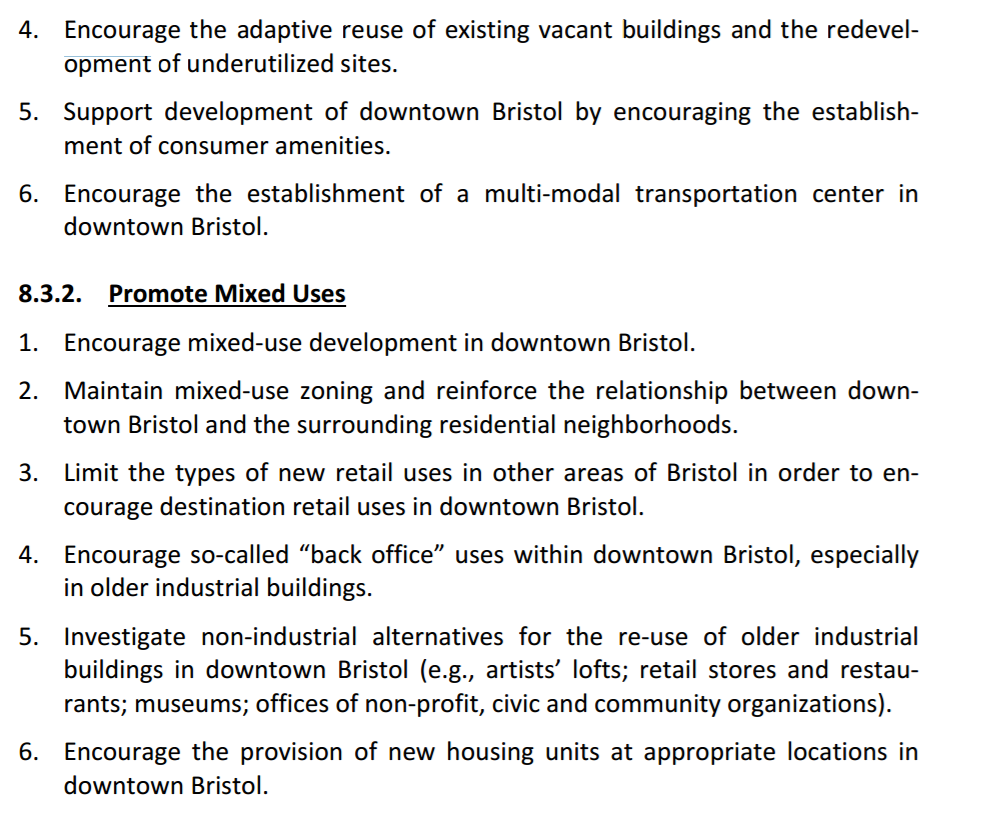 One can find these same goals now continue to exist in city plans made after the departure of Renaissance. Bristol's 10 Year Plan of Conservation and Development, "is used to guide land use decisions and regulations, coordinate development activities within the city as well as provide programs for implementation." according to the city's website. The establishment of a multimodal transportation center as well as encouraging the provision of new housing units in appropriate areas in downtown Bristol is included in this 2015 document.
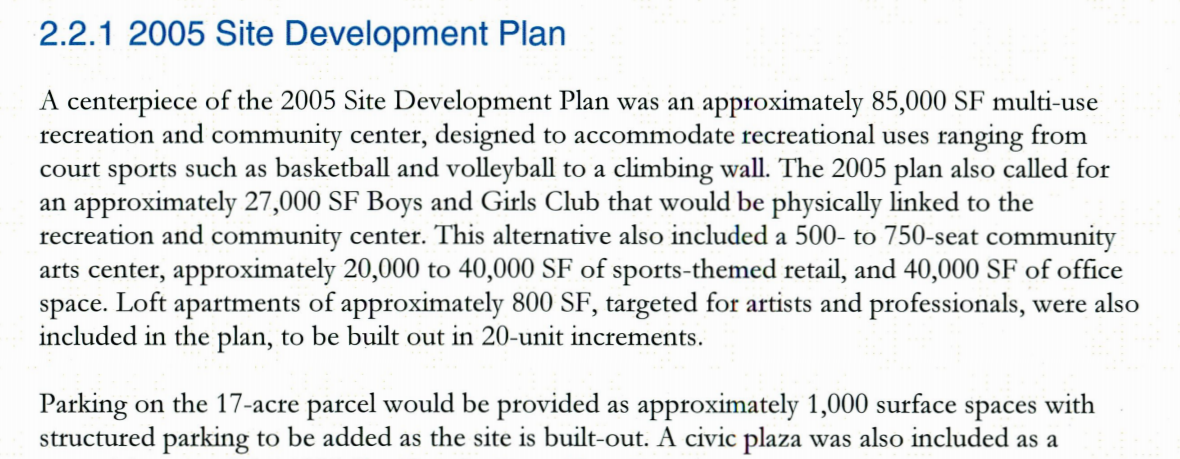 There are some more interesting facts contained in the Environmental Impact Evaluation dated August 2010, which can still be found on the city's website. Here are a few worthy of thought.


 "Developer Donald Monti of Renaissance Downtowns similarly blurs the conventional lines between public and private in his partnerships between public and private in his partnerships with small suburban cities, such as Bristol, Connecticut...Other downtown property owners are also invited into the arrangement."The Director of Bristol's Development Authority has recently stated that no kind of development has been ruled out. What do you expect will develop under these conditions and exactly who did you expect to be interested in doing so? Executive sessions for such projects may leave the public in the dark but needn't leave them unable to see what lies before them.